Sunday, August 15, 2021

First Light

One reason for all the bird images I've been gathering this summer is practice for bigger game. After 10 months of yard duty I was able to deploy the two Reconyx cameras in the national forest south of Red Lodge, MT four weeks ago. The plan is to leave at least one of them in place all winter. So far, I've gotten a bear, moose, deer, cat (probably feral), and various people with and without dogs. Pictured here are the bear and the moose, both taken by the old Reconyx. I'm thinking about moving the new Reconyx further up the mountain, which should eliminate some of the people/dogs. Or I might pull it out of there if I find an even better place for it.

Friday, August 13, 2021

New Birdbath

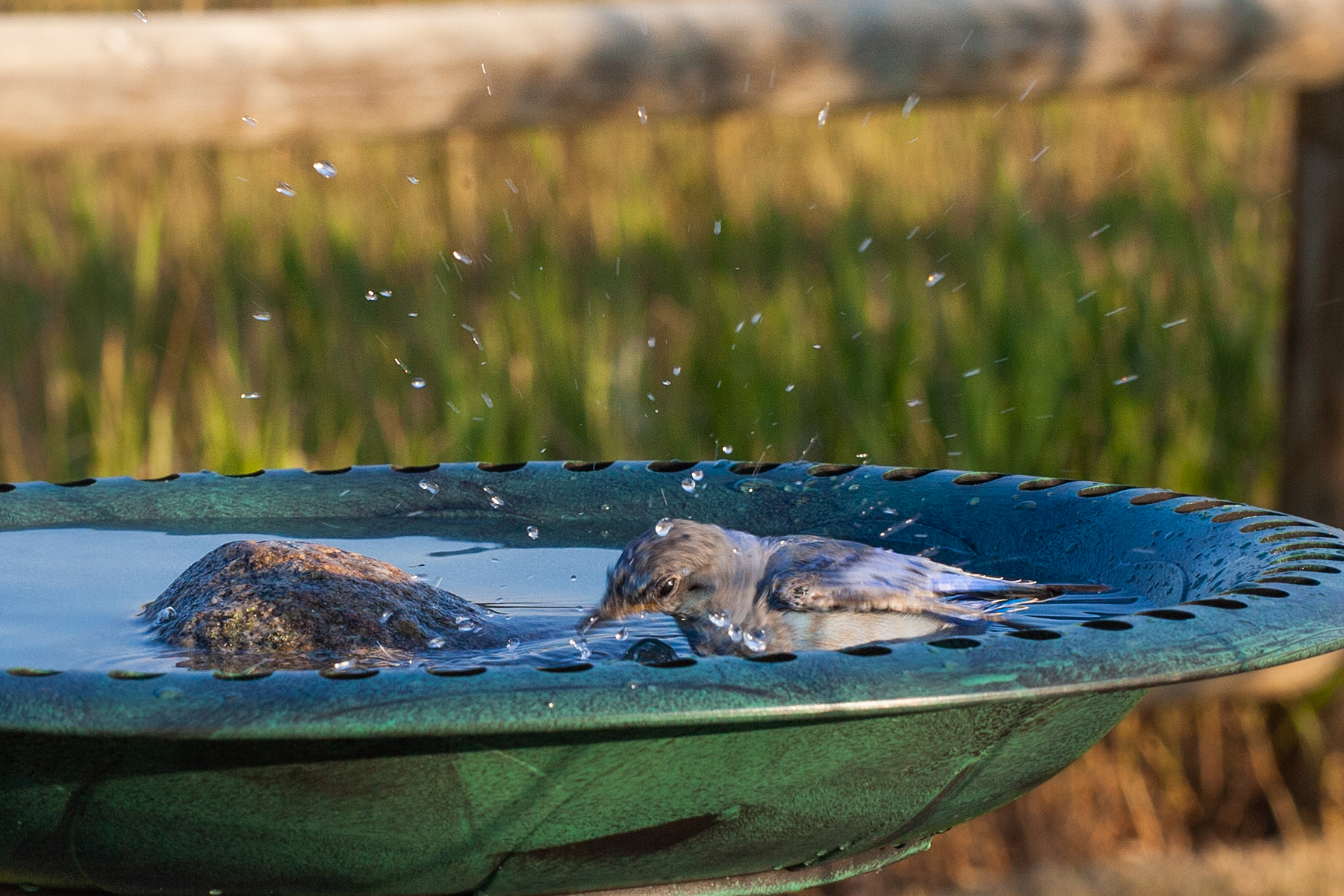
Before buying a birdbath, I set a water-filled plant tray on the ground for a few weeks to see if the birds would come. They did. So I took the plunge and bought a faux copper (colored plastic) birdbath for the yard. The bluebirds seem to approve. Canon 1D Mark II, 70-200 lens set at 104mm, Camtraptions PIR trigger, ISO 400, f/11, 1/320.

Tuesday, August 10, 2021

Robins

I felt like I was missing some shots with the PIR triggering just three shots in three seconds per actuation, so I decided to set the DSLR to low-speed burst. With the 1D Mark II, that results in 12 shots in about four seconds. I could set it to high-speed burst, but that would be overkill and result in way too many images to sort through. As it is, I'm going with the 1D to save to save wear and tear on my better camera, the 5D Mark III. These were all with the prefocused 500mm at a low angle. Depth of field is the most frustrating thing about this setup as anything behind the rock is not in sharp focus even at f/16.

It was a weird day and all that came to the bath were some robins. I don't go after robins, but if that's all that is around, that's what you get.

Sunday, August 8, 2021

Bath time

I've been posting lots of images on this site that are remote triggered rather than motion triggered, which may be bending the purpose of a site with "Trailcam" in the title. Today I finally got more than a few motion-triggered DSLR images that represent what I'm trying to accomplish. The setup was the 5D Mark III, 500mm lens, a very low tripod, and the Camtraptions trigger. I don't have the protective cases or external batteries necessary to set up a long-term camera trap, but in my back yard I can set up for the day and get dozens of images. Today I got bluebirds and robins competing for space at the bird bath; hopefully the flickers that the trailcam captured make a return appearance soon.

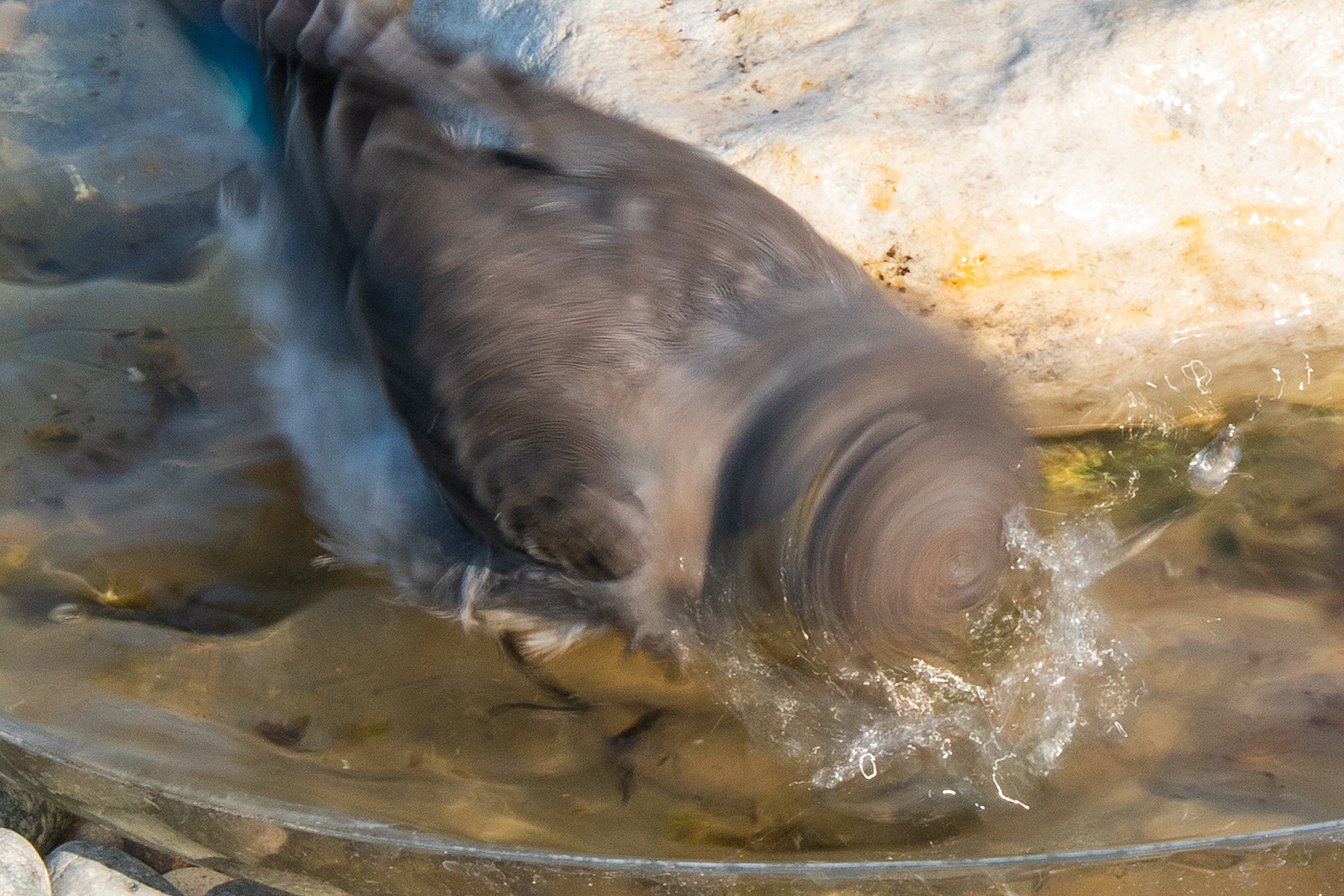
Fun with shutter speeds

The problem with using f/16 to get depth of field is it requires a much slower shutter speed or much higher ISO. My M100 selected ISO 160 in automatic mode, so the shutter speed is only 1/60. An interesting effect, but ISO 160 is too low to shoot birds unless they aren't moving. Remotely triggered using cell phone app.

Saturday, August 7, 2021

Bath

I set out mealworms for bluebirds a few months ago and got no interest from them. I decided before investing in a bird bath, I would try a makeshift setup to see if they would use it. I used a plastic plant tray with a big rock anchoring it. When we left on vacation two weeks ago, I focused melted Browning #6 on it. I reviewed the results today.

The melted Browning snapped 7,372 images with relatively few false triggers. Most of the subjects were bluebirds, but I also got various little brown birds, a goldfinch, a meadowlark, three flickers, robins, deer, mice, and even a dog and a cat. I'm only posting the flickers and the meadowlark because I think those are the most significant. I could post literally thousands of bluebird images but I need to get better image quality than the melted Browning provides.

Wednesday, July 21, 2021

Small flash

I'm still trying with the hummingbirds, trying to get a colorful shot that excludes the plastic feeder. Since the birds don't go near the few flowers we have, the color has to come from the birds. These first two shots were taken with the Canon M100 mirrorless, 70-200 lens, and the onboard flash, triggered with the Canon wifi cellphone app. Because the little flash fired, the iridescent neck feathers reflected some (depending on the angle) of the light.

The third image was taken with the 1D Mark III, 500 f4 lens, and natural light, prefocused and remotely triggered with a Canon IR transmitter. Good image, but it's got that plastic feeder in there.

The plastic feeder pulls them in, but then what? The solution would be a bed of hummingbird-friendly, colorful flowers, but that's probably not going to happen this late in this short summer.

Regarding species, I think the bird in the top two images is a male Rufous, and the bird at bottom (and in the July 19 post) might be a female Broad-tailed. Those IDs seem consistent with the range information and illustrations in the Sibley Guide to Birds.